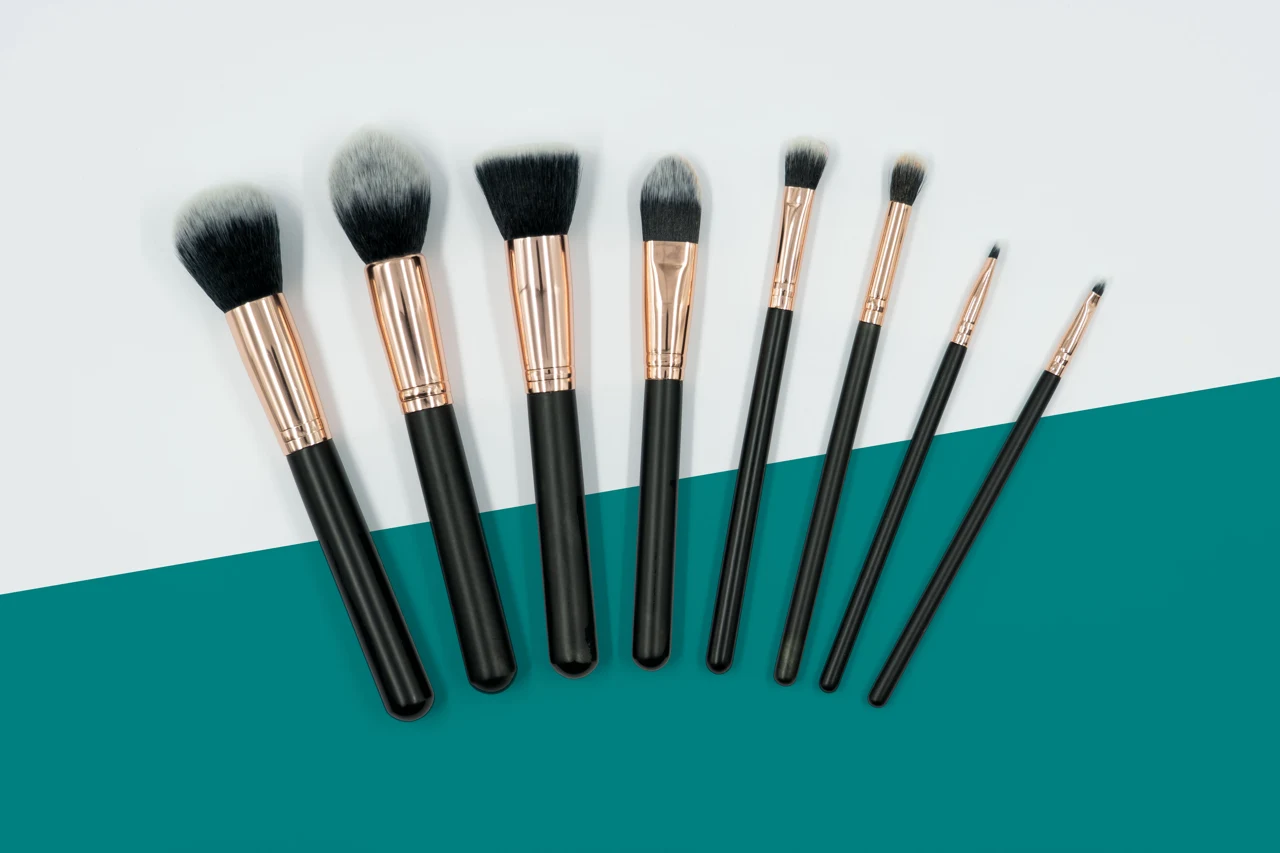
A spare brush can mean a second copy of the tool you use, or a different tool for a task the first one was not described to do. Those are different purchases. Real Techniques supplies a useful concrete example: its Expert Face Brush is identified as RT200, while its Everyday Essentials kit also names an RT300 Deluxe Crease Brush. The useful comparison is between those identifiable components and their stated roles, rather than between two similarly colored handles.
First work out what would actually be duplicated
Imagine Avery owns the Everyday Essentials kit and wants another brush for liquid foundation. The maker’s kit list contains RT400 Blush, RT300 Deluxe Crease, RT402 Setting, RT200 Expert Face and a Miracle Complexion Sponge. In this invented shopping case, the kit list establishes that Avery already has an RT200; it does not establish which loose brush on the dressing table is which. Read the actual handle or retained product information before treating the list as an inventory of the present collection.
The separate Expert Face listing identifies RT200 and describes cream and liquid foundation use. If a second copy of that tool is the intention, a separately listed RT200 answers the component question. Buying another complete kit would add several other components. Their presence is not an advantage simply because the bundle looks more comprehensive.
Change the task and the answer changes
Now change only Avery’s request: a brush for the kit’s stated cream or powder eyeshadow task. The kit’s directions assign that role to RT300 Deluxe Crease; they also mention concealer for it. This is a different component enquiry from replacing or duplicating RT200. The reader can name RT300 and the intended task when asking whether it is sold separately, instead of ordering an Expert Face Brush because both products appear in the same set.
A role stated for one kit component should not become permission for every brush in that kit. Equally, a brush description does not change the intended area of a cosmetic applied with it. This comparison identifies tools; it does not decide whether a particular pigment is appropriate near the eyes or whether a user’s symptoms have a cosmetic cause.
Put the care instruction on the component record
For the brushes, the maker’s pages advise weekly cleaning with its brush-cleaning gel or spray. Keep that direction with the brush identity rather than copying a sponge routine onto every component. The sponge and brushes are separately named objects. No cleaning method here is presented as a microbiological guarantee, and a planned routine is not evidence that a particular used tool has been cleaned.
A complete original purchase note can therefore read: ‘Current kit includes RT200. Needed task: a second cream/liquid-foundation brush. Candidate: separate Expert Face Brush RT200. Additional kit components not needed for this request. Retain the actual brush-care instructions.’ For the changed eyeshadow request, replace the task and candidate with RT300; do not quietly keep RT200 in the order.
Ask the supplier about the missing component
If RT300 cannot be found as a separate current offer, the useful message is specific: ‘The Everyday Essentials directions identify RT300 Deluxe Crease for cream or powder eyeshadow. Is that exact component available separately in your current US range? Please identify the current product rather than substituting another brush without explaining its stated use.’ This message has not been sent and no availability is assumed. A clear unanswered component question is a better stopping point than an unnecessary second set.
Sources & further reading
Published sources for the details and examples discussed in this story.