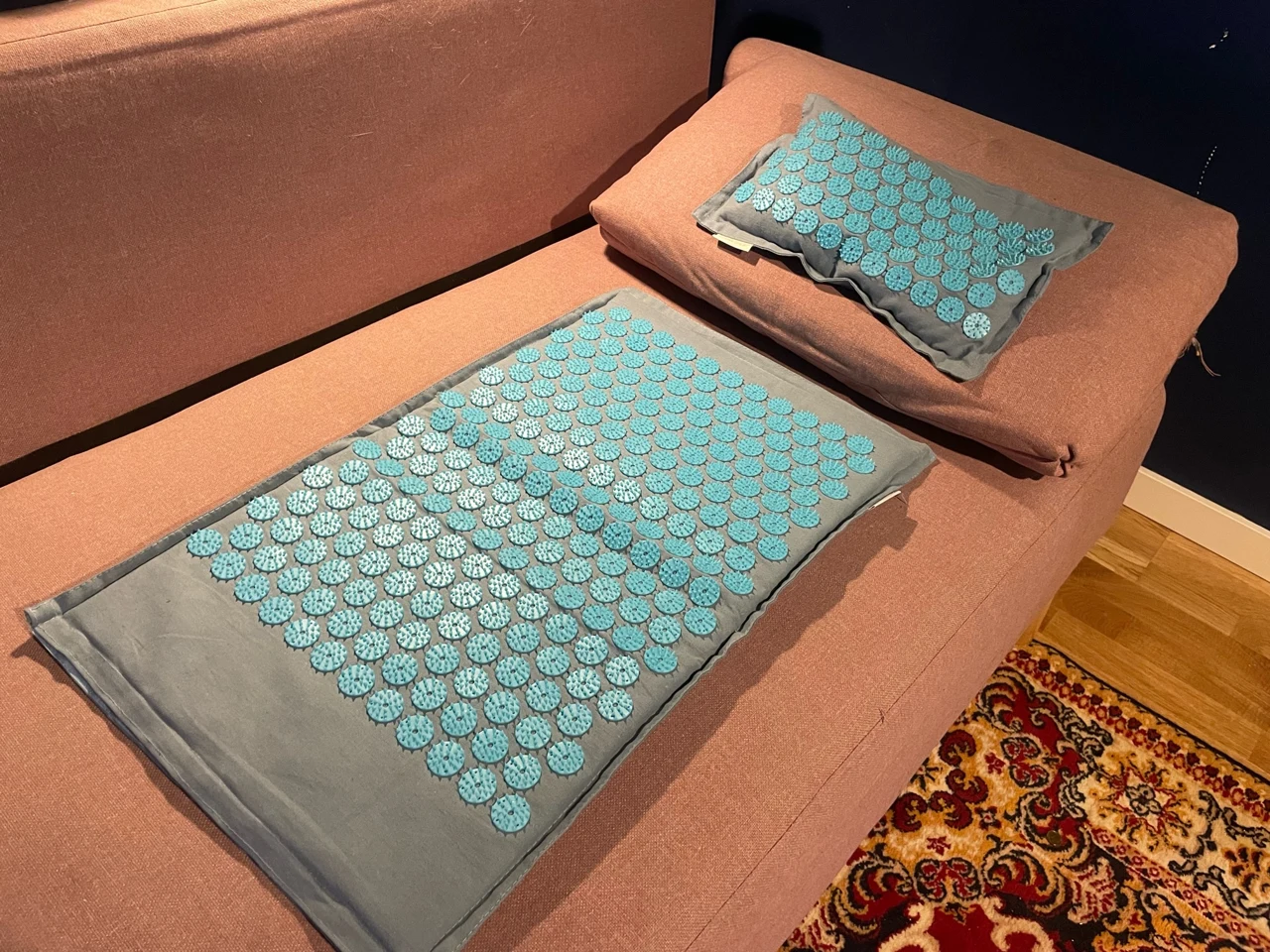
A product review can begin with an ordinary account of liking an experience and end with a promise about health. The change may involve only a few words: a pleasant pause becomes a treatment, or one person’s preference becomes a prediction about everyone else. You can describe enjoyment without making that leap. These fictional examples examine the wording of an experience; they do not recommend using a pressure mat or any other relaxation product.
The first statement stays with the person
Imagine Rowan writing a private note after an evening they associate with a relaxation product: “I liked having a reason to put my phone aside, and I enjoyed that pause.” This invented sentence tells us what Rowan valued. It does not isolate which part of the evening mattered, identify a biological mechanism, or show what would have happened without the product. None of those additions is necessary for the preference to be honestly expressed.
A second personal sentence might be less positive: “I wanted quiet time, but managing another object did not appeal to me.” That also remains a preference. It does not establish that the product is ineffective for a medical purpose, any more than Rowan’s enjoyment establishes that it treats one. Both speakers can describe their own priorities without becoming evidence for or against a clinical claim.
The second statement changes the question
Now change Rowan’s imagined account to “This product treats my condition, so it should work for other people too.” The sentence has gained a treatment conclusion and a prediction beyond the original person. Neither is supplied by the earlier account of enjoying a pause. The wording has moved from what Rowan liked to what the product is claimed to do.
NCCIH advises distinguishing opinion and advice from research-based information. Its guidance explicitly notes that testimonials and anecdotes are not the same as objective evidence, and that expected treatment benefits should have supporting scientific references. This is general guidance for evaluating information; it is not a favorable or unfavorable efficacy finding about the fictional product. No named pressure mat or acupressure intervention has been evaluated here.
A careful description need not sound like a trial
If Rowan wants to share the experience, a modest account can identify the aspect they liked without inventing measurements: the pause felt worthwhile to them, or they preferred putting the object away afterward. There is no need to add a condition, percentage improvement or promised result to make a personal review useful. Equally, a disclaimer at the end would not make an unsupported treatment promise well supported.
Suppose a friend asks, “Should I buy it for my health concern?” Rowan’s preference cannot answer that different question. They can say what appealed to them while leaving clinical effectiveness and individual suitability unresolved. That is more informative than turning enthusiasm into advice the original experience cannot justify. The friend need not repeat the purchase to validate Rowan’s enjoyment.
Let the buying purpose remain visible
Someone considering a product simply because they like the idea of owning it still needs actual product information and appropriate safety guidance. Calling a purchase a preference does not establish that it is suitable, risk-free or worth the cost. This article gives no instructions for pressure, positioning, session length or use on a particular body part.
If the purchase only makes sense as treatment for an actual concern, do not replace appropriate care with a testimonial. Seek qualified guidance and evidence relevant to that specific claim. A pleasant account can be part of a conversation about taste; it cannot close a clinical question. Avoid buying a larger package merely to turn an enjoyable moment into something that sounds more scientifically certain.
Keep the smaller statement useful
There is room for an honest middle position: “I enjoyed this, and I do not know whether it has the claimed health effect.” That sentence preserves the experience and the uncertainty together. It neither dismisses the person nor lends their story to a conclusion it did not establish. A relaxation purchase does not need a medical success story to be discussed clearly, and a medical question deserves more than an appealing story.
Sources & further reading
Published sources for the details and examples discussed in this story.