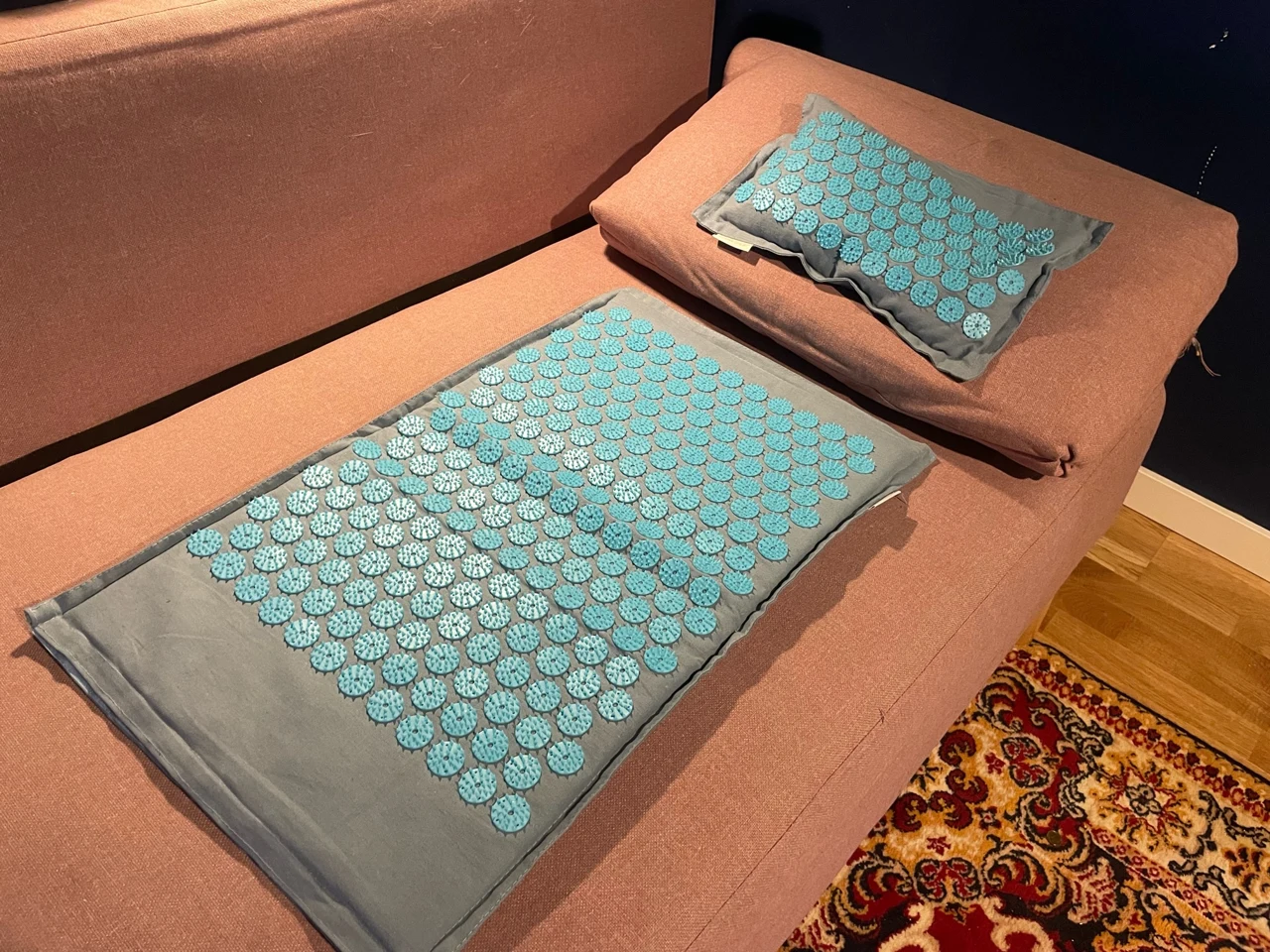
An advertisement for a pressure mat may refer to acupuncture research as though the shared vocabulary supplies the missing evidence. It does not. The first useful comparison is between the intervention that researchers studied and the object being sold. A real trial can make that gap visible without producing either a recommendation for a mat or a claim that no mat could ever have an effect.
| Evidence field | Cited trial abstract | Unspecified consumer-mat advert |
|---|---|---|
| Population | Adults with chronic mechanical low-back pain | Not established by citing this trial |
| Interventions/comparators | Individualized, standardized, simulated acupuncture; usual care | Exact mat/model/use not identified in the abstract |
| Outcomes | Back-related dysfunction; symptom bothersomeness | Product-specific claimed outcome needs its own support |
Begin with an identified study
The published abstract of the randomized trial indexed as PMID 19433697 describes 638 adults with chronic mechanical low-back pain assigned to individualized acupuncture, standardized acupuncture, simulated acupuncture or usual care. It identifies back-related dysfunction and symptom bothersomeness as primary outcomes. Those details specify a population, several interventions, comparators and outcomes; they are more informative than the word acupuncture on its own.
This discussion uses the authors' abstract and the general NCCIH explanation, not a claim to have independently reanalyzed participant data or fully read inaccessible supplementary material. No numerical treatment-effect result is being transferred to a consumer product.
Keep intervention and comparator distinct
NCCIH describes acupuncture as involving the insertion of fine needles and discusses simulated procedures as comparators in research. A simulated-acupuncture arm should not automatically be renamed 'pressure mat.' The abstract's mention of a simulated intervention does not identify an arbitrary retail mat, its construction or the circumstances in which someone would use it at home.
The comparison also matters on the other side. A finding against usual care and a finding against a simulated procedure answer different questions. The existence of several trial groups is not permission to choose whichever comparison makes a product claim look strongest.
Make the transfer gap visible
For the cited trial, the studied population was adults with a specified chronic back-pain condition. For an unspecified mat advert, the product model, intended population and proposed outcome may not be identified. Keep those cells blank until actual product-specific evidence supplies them. Do not fill them with the general idea that both interventions involve sensation or pressure.
A useful comparison therefore asks four separate things: which intervention was delivered, to whom, compared with what and measured by which outcome? Similar language does not make those four answers identical. A photograph of needles or a professional title in an advert does not repair the mismatch.
Do not make the evidence lesson a treatment plan
The point is narrower than deciding which treatment an individual should choose. A chronic pain concern deserves appropriate professional care, and a research comparison should not be used to stop established care or create a pressure-point routine. The consumer question remains whether the exact product claim has evidence that actually matches it.
Sources & further reading
Published sources for the details and examples discussed in this story.