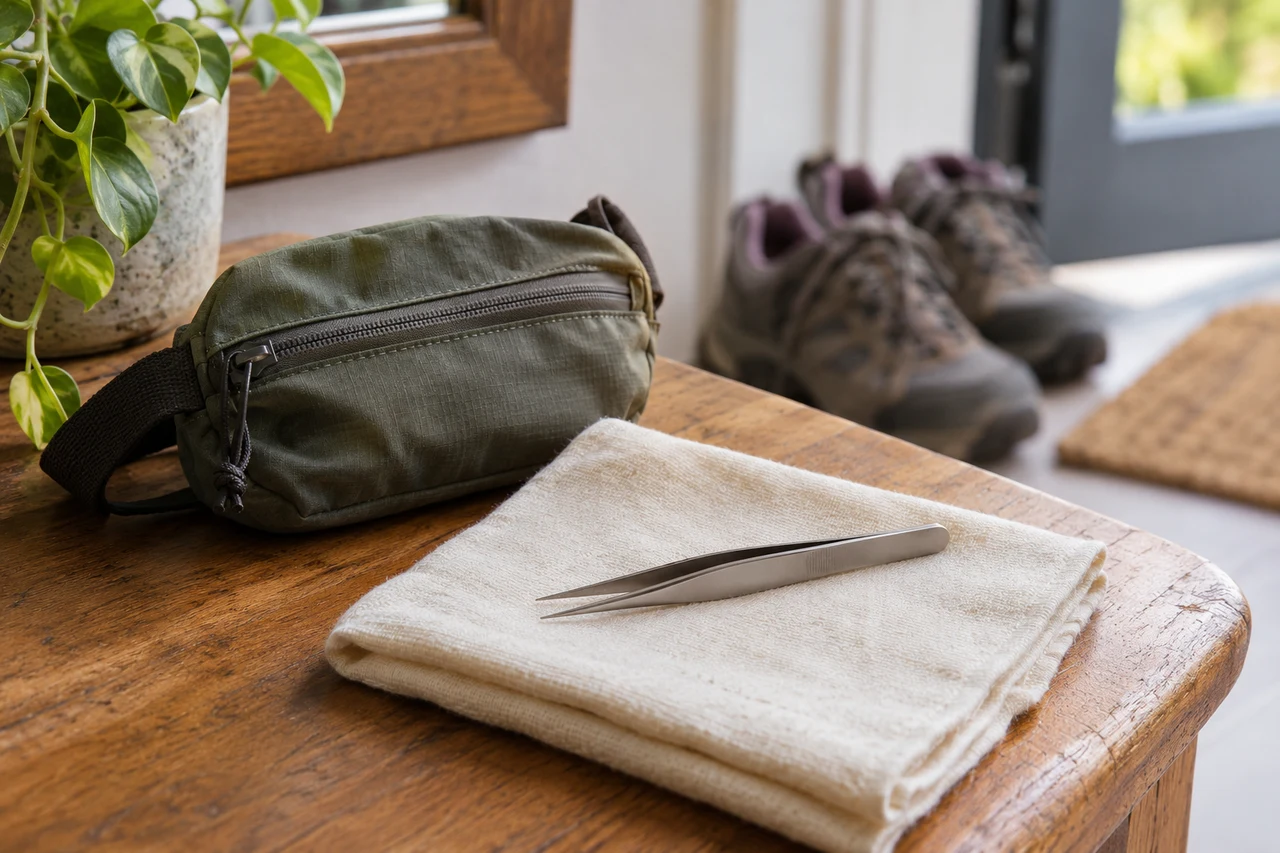
Finding an attached tick is a reason to act, rather than begin shopping for a complete outdoor kit. CDC advises prompt removal. This general U.S.-focused guide follows that published response and adds an original way to keep the later conversation clear. It does not identify a tick from a photograph, diagnose infection, prescribe medicine or describe an actual bite treated by this site.
Remove the attached tick promptly
CDC says not to delay removal while waiting to reach a healthcare provider. Use clean fine-tipped tweezers to grasp close to the skin’s surface, avoiding pressure on the tick’s body, then pull away with steady, even pressure without twisting or jerking. If fine-tipped tweezers are unavailable, CDC describes regular tweezers or fingers as alternatives, again avoiding squeezing.
Do not use heat, petroleum jelly, nail polish or other substances to make it detach. If mouthparts remain and cannot be removed easily with tweezers, CDC says to leave them alone. Do not dig into the skin. Dispose of the tick without crushing it in your fingers, clean the bite area and hands, and check for other attached ticks using CDC’s full guidance.
Keep a small when-and-where note
For an original fictional example, imagine an adult who finds a tick after a park walk. Their private note can state when it was found, when it was removed and where the exposure may have occurred. Keep suspected location distinct from a confirmed fact. The example supplies no actual attachment duration or assessment of infection risk.
If the person does not know when attachment began, record unknown rather than inventing a time from the walk’s length. A useful note preserves the uncertainty a clinician may need to discuss. It does not need an online score, a public photograph of the body or a shopping receipt to make the experience count.
Know what the record is for
CDC advises seeing a doctor if a rash or fever develops within several weeks after removal and reporting when and where the bite occurred. It also cautions against using commercial tick-test results for treatment decisions: a positive result does not establish infection, while a negative one can falsely reassure. Do not wait for such a result if unwell.
The fictional note can later add the date and description of a new concern and the advice actually received. Leave diagnostic labels to the clinician. This article sets no antibiotic eligibility rule, dose or treatment schedule and does not promise that successful removal eliminates every possibility of illness.
Separate an emergency from a later review
Severe symptoms require urgent attention rather than completion of a notebook. NHS insect-bite guidance identifies sudden mouth, throat or tongue swelling, breathing difficulty, collapse or marked confusion among signs needing emergency help. For serious emergency symptoms, seek local emergency medical help immediately. This U.S.-focused guide does not adopt the NHS’s UK contact numbers.
After the immediate response, check whether a suitable clean pair of tweezers is available for future outings and follow actual product care directions. A larger branded kit or a paid tick-testing package is not a prerequisite for this workflow. Keep the note private and use it to support an actual healthcare conversation when needed, rather than treating a tidy record as medical clearance.
Sources & further reading
Published sources for the details and examples discussed in this story.