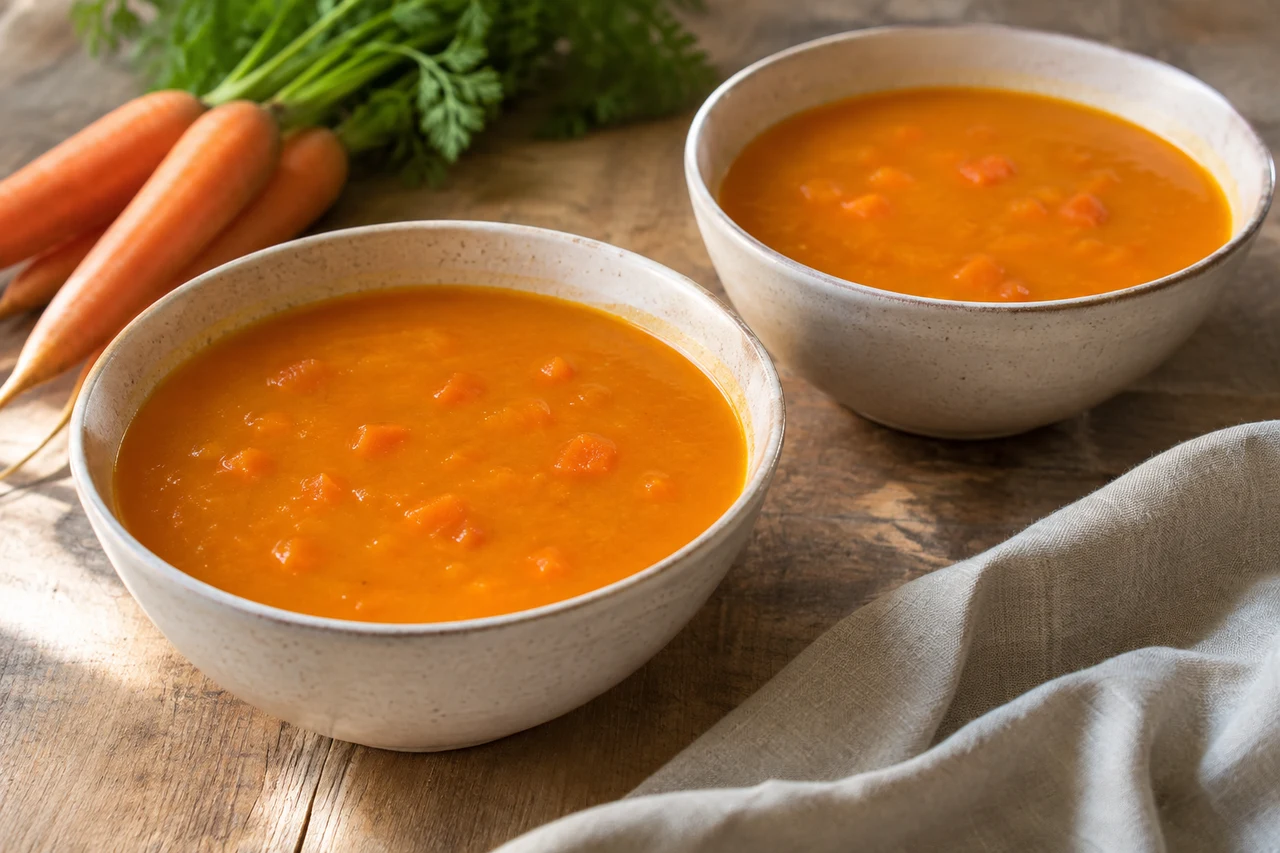
Soup does not need a perfectly smooth texture to have a complete method. This original carrot-and-ginger proposal uses manual mashing after the vegetables soften, leaving a deliberately rustic finish. It makes two proposed bowls without a blender or hot-liquid appliance procedure. The recipe is untested: no cooking, tasting, timing or nutrition analysis has been performed. Its serving division is not a dietary prescription.
Gather the complete measured list
Use 500 grams prepared carrot, 60 grams prepared onion, 8 grams peeled finely grated fresh ginger, 1 tablespoon olive oil and 600 millilitres drinking water. Reserve up to 100 additional millilitres water for the specified final adjustment. No stock concentrate, cream, garnish, extra seasoning or bread is required by this recipe.
Begin with clean hands, clean utensils, a suitable lidded saucepan and a manual masher appropriate to that cookware. Wash the produce under running water before peeling or cutting. Remove unsuitable parts and discard rotten produce. FDA advises against soap on produce and calls for keeping it separate from raw meat, poultry, seafood and their equipment. Check actual ingredients against the diners’ needs separately.
Start the onion, then soften the carrot
Cut the prepared onion into small pieces and the carrot into roughly 1-centimetre pieces. Warm the oil in the saucepan over medium-low heat. Add the onion and stir gently until it begins to soften without deliberately browning, then stir in the ginger. These are proposed texture cues, not a tested flavor verdict.
Add the carrots and the measured 600 millilitres water. Bring to a boil, reduce to a gentle simmer and cover, leaving the actual pan appropriately managed. Stir occasionally and check the carrot with a fork. Begin checking around twenty minutes, continuing as needed until pieces yield easily enough for manual mashing. The estimated time does not certify doneness for every pan, cut size or starting condition.
Mash off the heat and choose the final consistency
Remove the pan from the heat onto an appropriate stable surface. Following the masher and cookware instructions, work carefully to break down the softened vegetables without splashing hot liquid. This method intends small remaining pieces. It makes no promise of a strained puree or the texture a blender would produce.
If the mixture is thicker than the intended spoonable soup, return it to the heat and add some of the reserved water gradually, stirring and bringing it back to a simmer. Stop within the stated 100-millilitre addition when the desired consistency is reached. Record any amount actually used if you later cook it; none has been measured in a real batch here.
Keep serving and later handling explicit
Divide into two clean bowls and serve at an appropriate eating temperature. The starting water amount does not establish the final yield, because evaporation and the optional adjustment vary. No calorie, weight-loss, clinical benefit or allergen-free claim follows from using vegetables and water.
Refrigerate leftovers promptly in suitable shallow containers. FDA specifies refrigeration at or below 40°F and chilling perishables within two hours, shortened to one hour above 90°F; it directs bringing soups to a boil when reheating. This recipe establishes no storage life. Before purchasing a blender or soup maker, decide whether a rustic manually mashed result already suits the actual meal. A new appliance would require its own complete applicable instructions, not a transferred hot-liquid method.
Sources & further reading
Published sources for the details and examples discussed in this story.