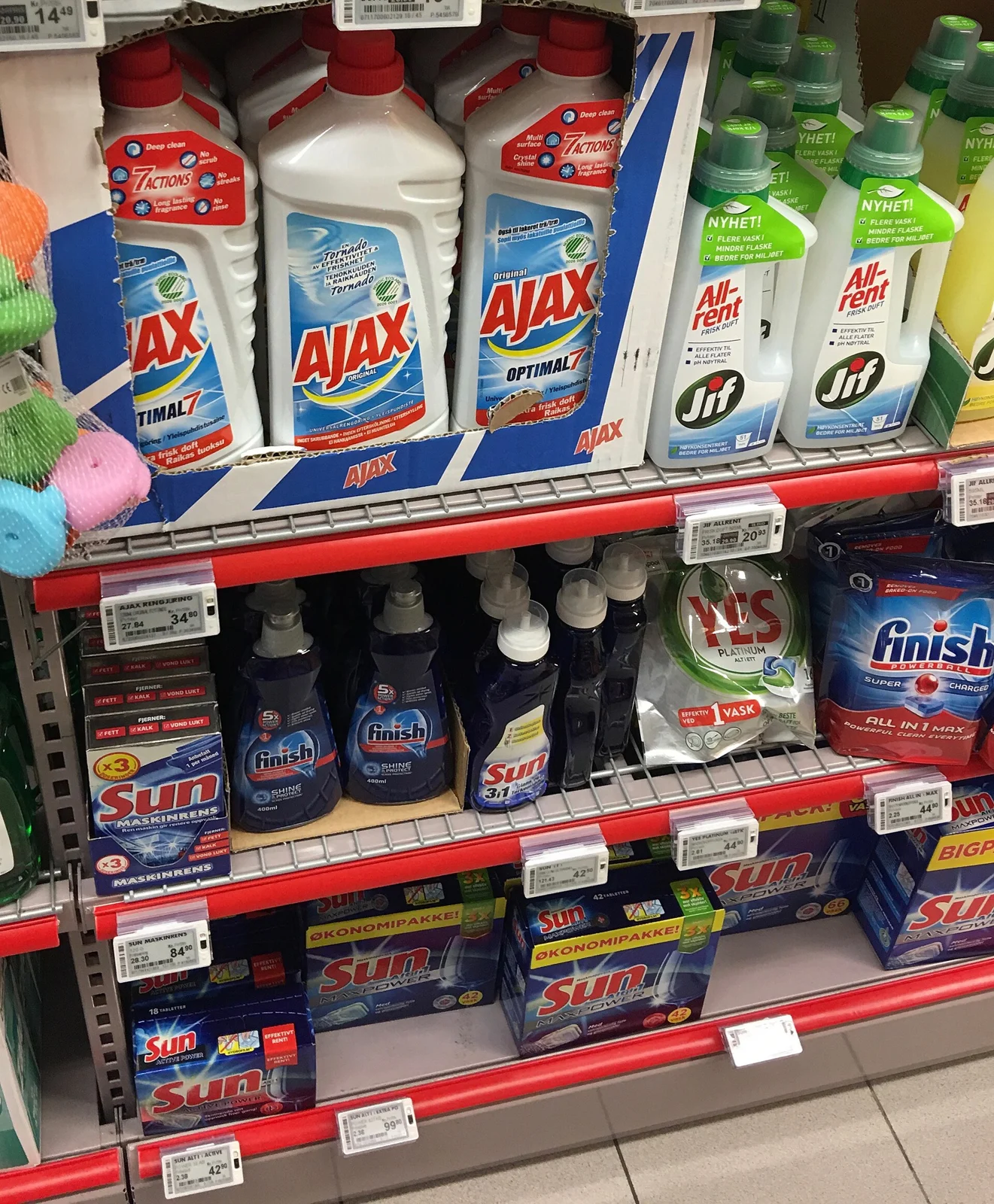
Cleaning-product shopping can blur several different tasks into a promise of a perfectly safe home. A surface cleaner, a disinfectant, and a product for skin are not interchangeable because their bottles share a color or fragrance. Before buying more supplies, identify the actual task and read the full label. CDC guidance emphasizes appropriate products, correct directions, ventilation where required, and safe storage. A well-organized collection begins with those details rather than a row of matching containers.
Separate cleaning from disinfecting
The CDC explains that cleaning removes germs, dirt, and impurities, while disinfecting uses chemicals to kill remaining germs on surfaces. In many ordinary situations, routine cleaning is sufficient; particular household circumstances may call for more. Do not assume that disinfecting every object is automatically the right goal. Start with the surface and current official guidance. A product's stronger-sounding name does not tell you whether it suits the material or the task you have in mind.
Read suitability and warnings together
Check the stated surface uses, required protective equipment, ventilation, dilution where applicable, and disposal information. Follow the exact label instead of applying a method from another product. If a surface has manufacturer care instructions, consider those as well. A successful purchase must be compatible with both the cleaning task and the object being cleaned. Do not infer that a natural-sounding ingredient makes every use safe, or that a familiar brand removes the need to read warnings when the formulation or product changes.
Notice contact time
For disinfectants, the CDC explains that the surface needs to remain wet for the label's stated contact time. This is different from spraying and immediately wiping because the surface looks clean. Read how the product is intended to be used before deciding whether it fits your routine. Do not invent a universal duration or increase a concentration on the assumption that more is better. If the instructions are unclear or missing, obtain the manufacturer's information before using the product.
Keep products separate and identifiable
CDC advice says not to mix cleaning products or chemicals and to keep them out of reach of children and pets. Do not combine leftovers or transfer them into a food container to save space. Preserve the original label and follow any specific storage requirements. If instructions require a prepared solution, label and handle it as directed. A decorative organizer should make the correct bottle easy to identify, not remove the information needed for appropriate use or place hazardous contents beside everyday toiletries.
Buy for a clear gap
Audit the existing supplies by task and condition before taking advantage of a bundle. One appropriate product may cover several needs, while a particular surface may require a separate approach. Compare the useful quantity, full cost, and any equipment needed to follow the label. Follow local and product disposal guidance for unwanted supplies. A smaller, understood collection is easier to maintain than a cupboard of overlapping promises. The goal is appropriate cleaning, not an unsupported claim that every ordinary household risk has been eliminated.
Sources & further reading
Published sources for the details and examples discussed in this story.