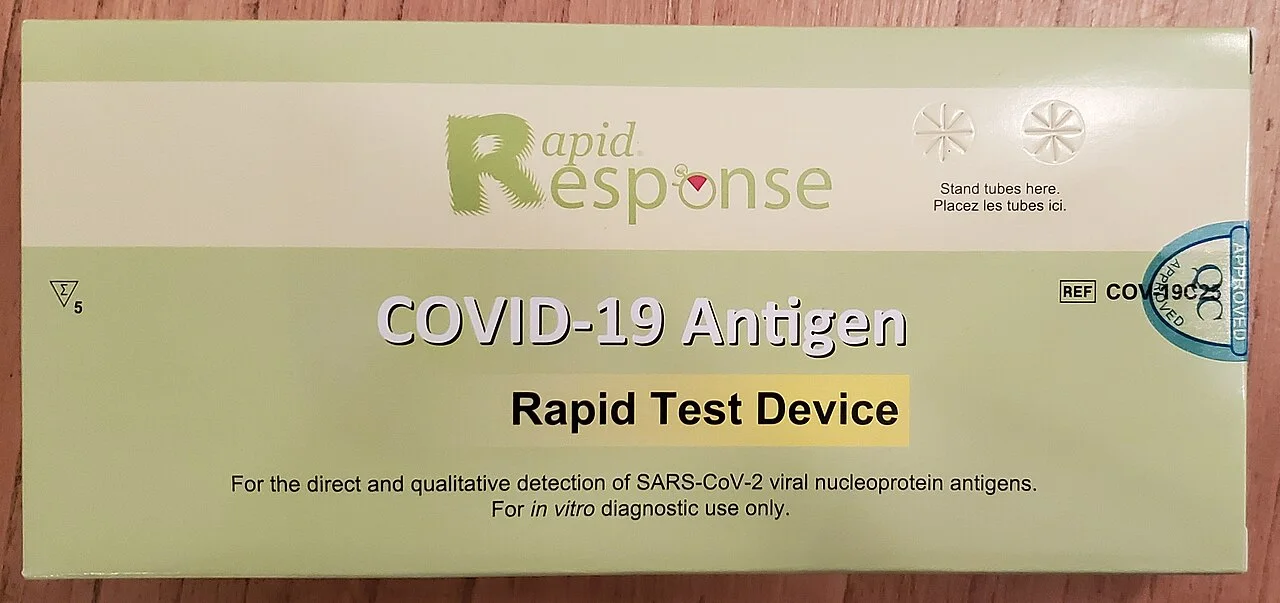
An old date on a home COVID-19 test box can prompt two opposite guesses: the test must be unusable, or every date for that brand has been extended. Neither guess is an exact lookup. The question is whether current official information identifies an applicable expiration date for this particular test and, where relevant, its lot. That lookup does not interpret a test result or establish how a kit has been stored.
Keep the box identity intact
Read the manufacturer and full test name from the actual packaging, then preserve the lot identifier and printed expiration information. Products under the same broad brand can have different names or presentations. A familiar logo is not enough to match an official entry, and an instruction sheet from a different kit should not fill a gap.
A small personal note can keep these fields side by side: manufacturer, test name, lot, printed date and the official source checked. Do not invent a lot number for practice or replace a faded digit with the one that makes a table match. An unreadable identifier is an unresolved part of the question.
Use the actual FDA entry
FDA's at-home OTC COVID-19 test table provides manufacturer/test names, expiration information and links to instructions. It says the table is updated regularly and can be searched by manufacturer, test name or other details. Some expiration entries direct the reader to the box label; others provide linked information about an extension.
Follow the expiration information for the exact entry. If a linked notice identifies particular lots, a date for another lot does not establish the date for yours. Likewise, finding that a product once received an extension is not proof that its extended date is still in the future when you check it.
A date lookup has a boundary
Storage conditions, damaged packaging, missing components and the actual instructions remain relevant. A date extension does not establish that an individual kit was stored correctly or that every component is present. If the official match or the instructions remain unclear, ask the manufacturer or an appropriate healthcare professional rather than treating a partial match as permission.
The result of the lookup can be recorded plainly: the applicable official information found, the exact match that supports it and anything still unresolved. It should not say 'FDA approved this box' merely because a brand appears in a table.
Keep care decisions separate
This is a record-identification guide, not advice about when to test, how often to repeat a test or what a result means. Do not delay needed medical care while pursuing an expiration lookup. Questions about symptoms or clinical decisions belong with current authoritative advice and appropriate healthcare support.
Sources & further reading
Published sources for the details and examples discussed in this story.