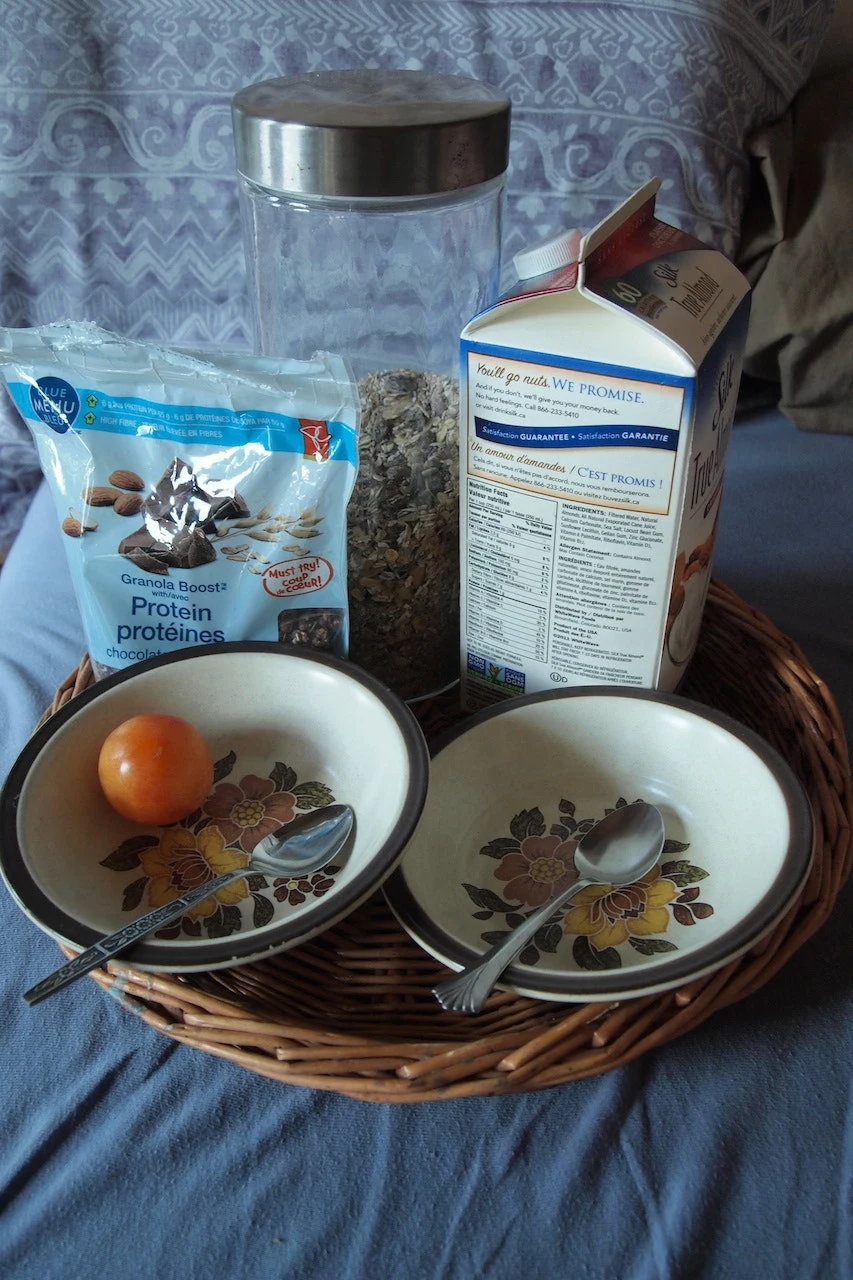
The prepared column on a cereal label has boundaries, even when the bowl looks ordinary. In this US Crispix example, it describes a particular cereal amount with three-quarters of a cup of skim milk. Adding any milk does not automatically make that column a description of breakfast. Keep the complete inputs beside the numbers. The two bowls below are fictional examples, not food we weighed, ate or tested.
| Published field | 39 g cereal | With ¾ cup skim milk | Displayed difference |
|---|---|---|---|
| Calories | 150 | 210 | +60 |
| Protein | 3 g | 9 g | +6 g |
| Total sugars | 5 g | 14 g | +9 g |
| Added sugars included in total | 5 g | 5 g | 0 g |
Keep the identified panel with its inputs
The retained SmartLabel record identifies Kellogg’s Crispix cereal in an 18-ounce package, GTIN 00038000924224 and nutrition-label identifier 16007. Its serving is 1⅓ cups, or 39 grams. The second column specifies that cereal serving with ¾ cup skim milk. A bowl’s appearance cannot supply those quantities: record both ingredients before copying a prepared figure.
The record says its information was last updated on April 25, 2024. That is the product-information date, not the date this article was researched. The page also directs readers to the current package because information can change. Match the real carton when making a current decision rather than assuming a familiar name identifies an unchanged formula forever.
The four-row ledger keeps the published cereal and prepared values side by side. Its final column is simple subtraction of displayed values, not a separate laboratory measurement of milk. Each row refers to the same identified preparation.
Read the change without adding the same sugar twice
Calories rise from 150 to 210, a difference of 60. Protein rises from 3 to 9 grams, a difference of 6 grams. Total sugars rise from 5 to 14 grams, a difference of 9 grams. Added sugars remain at 5 grams in both columns. Saying that every number increases would misread this particular comparison.
The added-sugars line says includes, so it belongs within total sugars. For the prepared column, 14 grams total sugars and 5 grams added sugars do not become 19 grams total sugars. Equally, unchanged added sugars are not permission to copy the cereal-only total-sugars figure into the prepared record. Preserve each row’s label and unit.
These differences do not rank the breakfasts or recommend an amount of calories, protein or sugar for a particular person. The selected rows also do not describe every nutrient on the panel. They answer the narrower question of what this identified preparation changes in four published fields.
Bowl A matches the listed composition
Declare bowl A as 39 grams of the identified cereal plus ¾ cup skim milk, with no fruit or other ingredient added. Under those assumptions, the prepared column describes the listed composition. The completed four-field note is 210 calories, 9 grams protein, 14 grams total sugars and 5 grams added sugars.
Do not add the cereal’s 150 calories again. The prepared column already includes that cereal serving. If the question instead concerns the cereal before milk, use the cereal column and label it cereal only. Those are different descriptions, not two meals whose figures should be combined. Keep the full cereal-plus-milk inputs beside the prepared numbers so they retain their meaning later.
Bowl B changes more than the picture
Now declare bowl B as the same 39 grams of cereal, one cup of a different milk and sliced fruit. It no longer has the prepared column’s composition. Both milk identity and quantity have changed, and fruit is another ingredient. Writing 210 calories beside the complete bowl would silently erase those differences. The table does not supply the inputs needed for a replacement total.
Keep the known part: the identified cereal serving’s published values. Obtain the actual other ingredients’ applicable information and quantities before producing a complete total. Do not subtract an imagined milk allowance from 210 or treat unspecified fruit as having no contribution. When the inputs are unavailable, leave the whole-bowl total unresolved rather than filling the gap with a precise-looking number.
This second bowl is not presented as better or worse. It demonstrates why the prepared column is a matched-input shortcut, not a general with-milk button. The useful preparation note names what the figures describe; it does not require turning breakfast into a universal score.
Sources & further reading
Published sources for the details and examples discussed in this story.