An eight-piece bread recipe can belong to a small table without being rewritten into a new formula. This feature uses Charlotte Rutledge’s Quick and Easy Flatbreads for King Arthur Baking, then adds an original two-person serving and equipment plan. The published recipe is attributed below. We have not cooked it, and dividing eight pieces between two people is arithmetic, not a nutrition recommendation.
Keep the complete published base together
King Arthur lists 170 grams lukewarm water, 14 grams olive oil, 6 grams table salt, 254 grams King Arthur Unbleached Bread Flour divided into 240 and 14 grams, 1½ teaspoons instant yeast and 1 teaspoon baking powder. This is a yeasted bread-flour route, not a yogurt dough or mix-kit method.
Its sequence combines everything except the reserved flour with a stand mixer’s paddle on medium for 30–45 seconds, stopping midway to scrape. Dust the work area from the reserve; knead 2–3 minutes, adding reserve as needed, until springy and slightly tacky. Cover with the inverted bowl for 30 minutes. Make eight balls, 55–60 grams each; cover for five minutes. Preheat a large skillet, ideally 12 inches or more, over medium heat, or a griddle to 325°F. Roll each piece roughly ¼ inch thick and six inches across, flouring if needed. Dry-fry two to four together: 2–3 minutes or until golden on the first side, then two minutes on the second. Cool slightly on a rack.
Treat the waiting periods as part of the meal
Before starting, choose a period in which the dough’s rests and the cooking can happen without another urgent job taking the same work surface. The mixing stage, covered dough and finished breads need appropriate places. That is the original household plan here, rather than a claim that the recipe has been sped up.
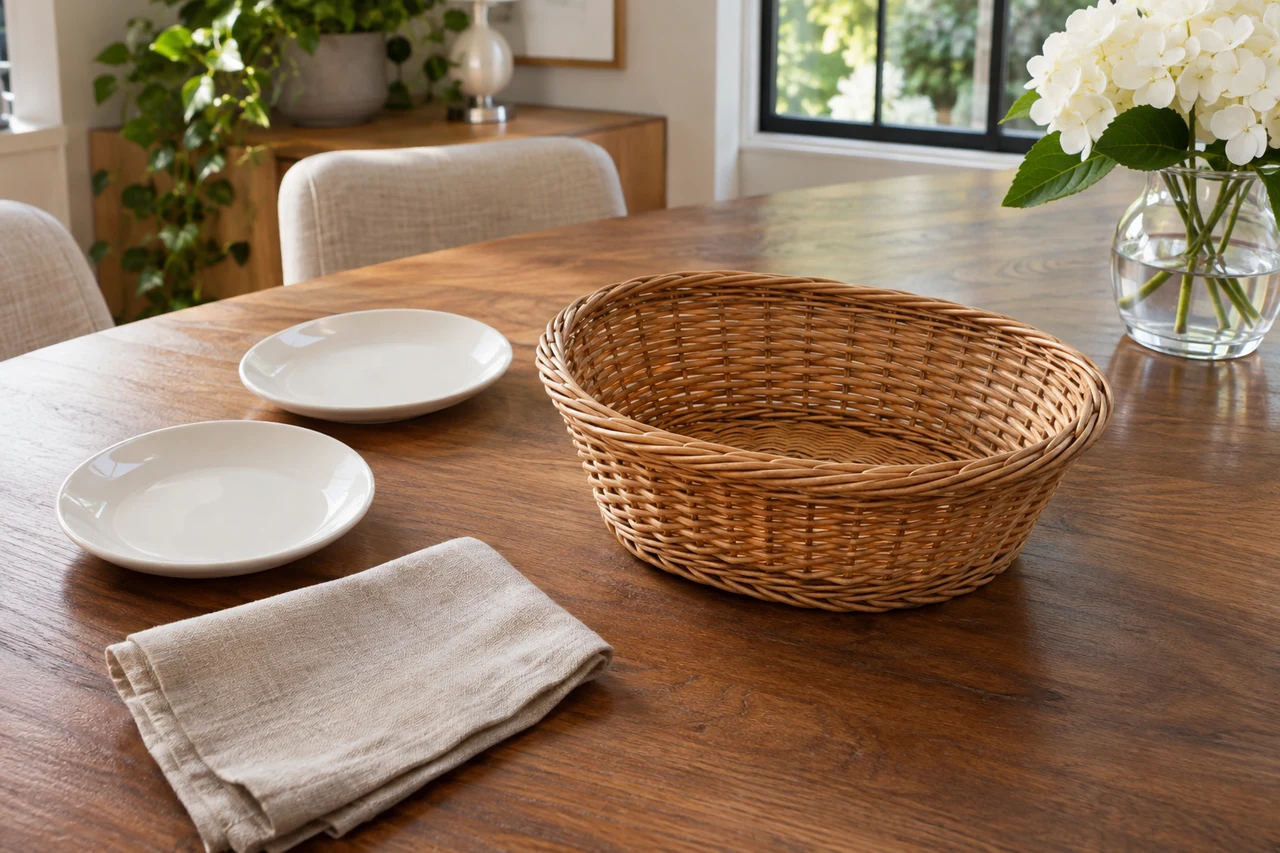
For the proposed table of two, place two clean side plates and a shared serving plate ready before cooking. Eight pieces divided equally would be four each, but the people at the table decide what to eat and what else their meal needs. This article supplies no complete-diet assessment, filling recipe or measured finished weight.
Plan the queue before buying a second cooking surface
A single suitable skillet can require successive batches. Choose a clear appropriate place for the rack and keep the work area organized so the next piece can be shaped without crowding the hot cookware. Follow the actual equipment instructions. There is no need to assume every available burner must be occupied to serve a small table.
A griddle is the published alternative, not an instruction to buy one. Compare a proposed appliance with the actual cooking area and storage available, including whether the required stand mixer is already accessible. If the method does not suit the equipment you own, choose another complete supported recipe instead of quietly substituting an untested mixing or cooking process.
Keep raw-dough handling separate from a finished-bread picture
FDA warns against eating raw flour or dough and advises separating it from ready-to-eat foods, then washing hands and cleaning utensils and surfaces. It also warns that home flour heat treatment does not make flour safe to eat raw. Follow applicable cooking directions; a browned illustration cannot verify a cooked batch.
Serve the actual breads only after completing the applicable preparation and cooking, allowing appropriate cooling. No storage life, gluten-free claim or dietary benefit is supplied here. Keep the original recipe link for its full instructions rather than borrowing a timing line for a different dough. A purchasing decision should support the complete method and meal you intend to make, without an invented taste verdict or equipment-performance result.
Sources & further reading
Published sources for the details and examples discussed in this story.