A meal can begin with a frozen ingredient and still contain choices worth enjoying. The useful question is not whether every vegetable came from the same shop section. It is how the ingredients fit together, what is ready to use and what preparation the actual products require. Consider two original, untested meal ideas. They illustrate possible combinations rather than portions, recipes or a claim that a particular plate meets everyone's nutritional needs.
A familiar pasta meal with one change of emphasis
In the first imagined supper, a household already plans to prepare its familiar pasta. Instead of buying several extra fresh vegetables for a new recipe, it considers a suitable frozen pea product and the tomatoes already available. The peas would be prepared according to their own instructions; the fresh component would also need appropriate handling. No cooking sequence or timing is supplied by this example.
The composition has two different roles: a vegetable incorporated into the warm meal and a separate fresh element the household enjoys. Someone might prefer to keep both within one dish; another might want the contrast beside it. That is a preference about the meal, not evidence that one arrangement has a superior nutrient total. Neither arrangement obliges the reader to buy a special sauce or another cooking appliance.
A bowl whose variety does not depend on a crowded shopping list
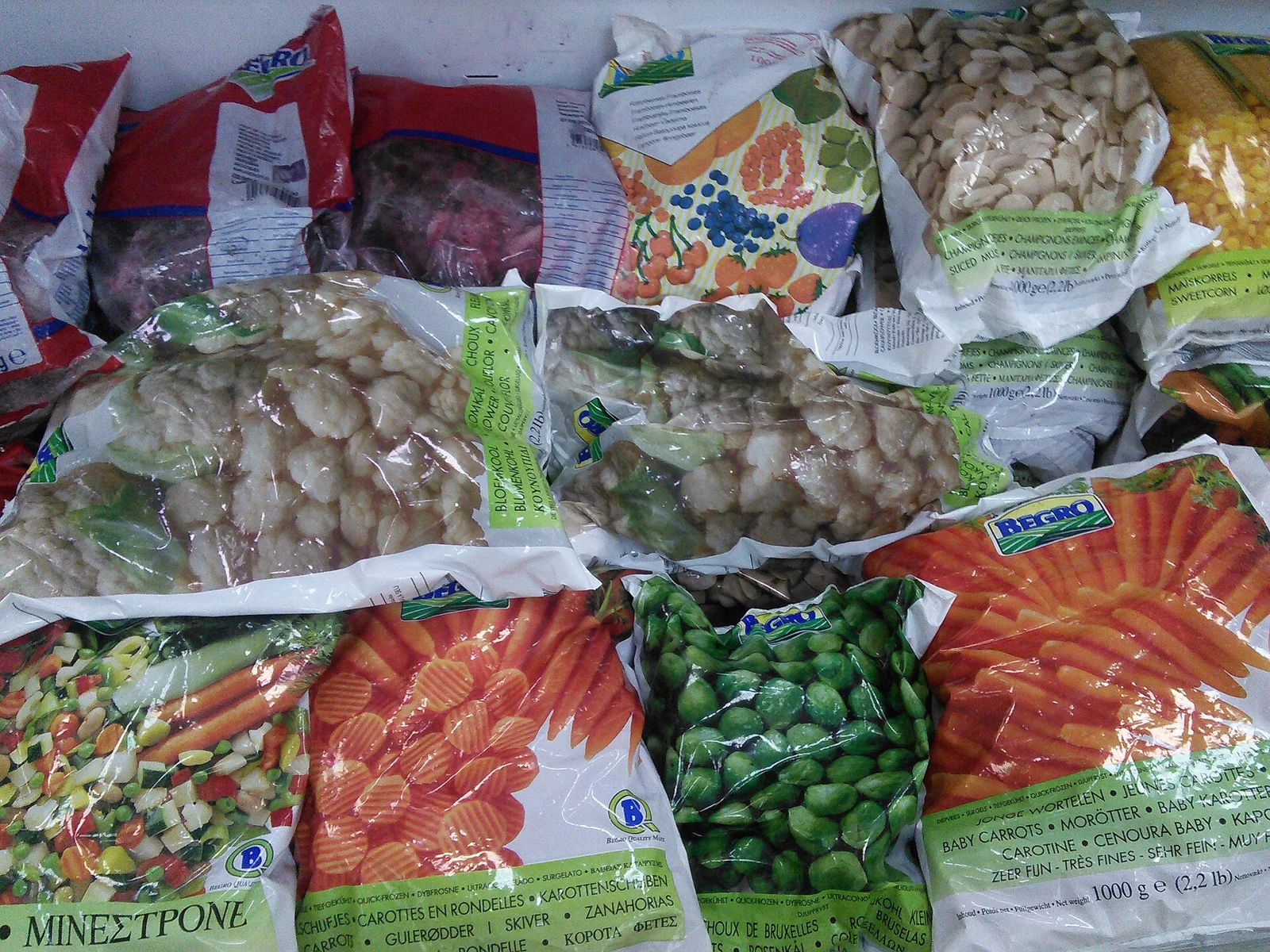
A second fictional household has a familiar grain dish and is considering a frozen vegetable mixture rather than several separate bags. It first asks whether the mixture's actual ingredients suit the people and the dish. A blend that includes something nobody wants to eat is not automatically convenient. Fresh fruit already intended for another meal might follow afterward, without needing to be incorporated into the bowl.
Here the practical advantage being considered is access to different usable ingredients, not a larger number of colors in one photograph. A single mixture is not required to provide every kind of variety. Nor does an attractive bowl establish a nutritionally complete diet. Personal dietary needs, allergies and actual product contents can change the choice.
What the general guidance supports
CDC's healthy-eating guidance includes frozen vegetables among ways to add variety and includes fresh, frozen and canned fruit as options. That supports leaving more than one format in an ordinary food plan. It does not establish that any two products are nutritionally identical, or that a colorful meal has met a personal target. This article does not calculate calories or prescribe proportions.
The word frozen also does not mean ready to eat. FDA's food-storage guidance says to follow the cooking instructions on commercially frozen foods. The meal ideas above depend on appropriate preparation; they are not permission to scatter an unprepared frozen product into food because it looks like a familiar vegetable. Storage and handling remain real requirements even when the proposed meal sounds simple.
Let the next purchase serve one of the meals
Before buying, choose which role the product would have: an ingredient in the warm dish, a separate accompaniment or something for another occasion. Compare the actual mixture with that role. There is no need to replace usable fresh produce merely to make the plan look more organized, or to buy a large frozen assortment to prove that the freezer is well stocked.
The two examples solve different small problems. The first keeps a familiar supper while adding a suitable component; the second uses a mixture to avoid buying several separate ingredients for one idea. Neither has to become a rule for the whole week. A modest meal can remain satisfying to choose without being presented as a perfect plate or a test of how carefully someone shops.
Sources & further reading
Published sources for the details and examples discussed in this story.