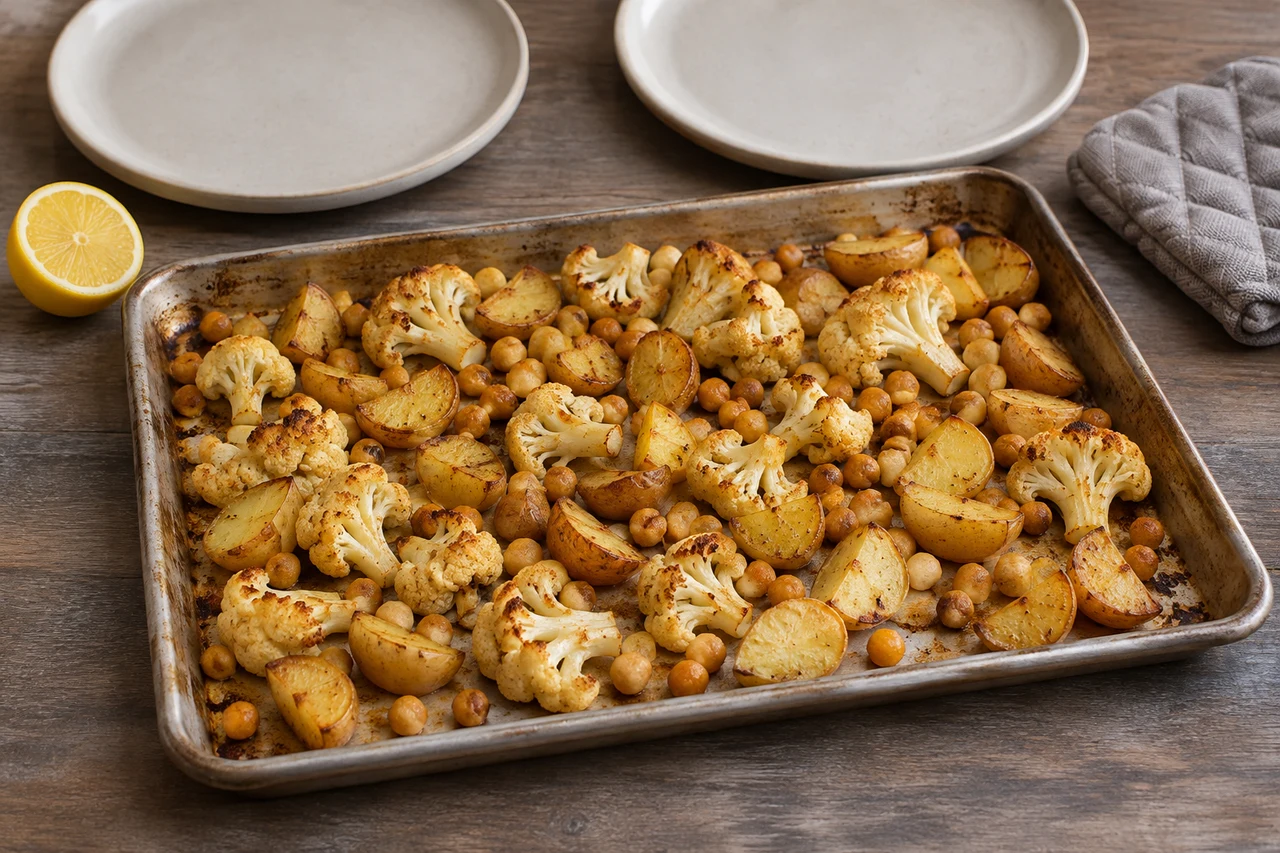
Putting every ingredient on the tray at once is not the only way to plan a vegetable roast. This complete original proposal stages potatoes, cauliflower and ready-to-eat chickpeas so each addition has its own check. It is untested: we have not cooked, tasted or timed it. The two-plate serving arrangement is a proposal, not a verified yield, calorie calculation or individual nutrition prescription.
Measure everything and divide the oil
Use 300 grams prepared potatoes, 300 grams prepared cauliflower florets, 200 grams drained commercially cooked chickpeas explicitly labeled ready to eat, 2 tablespoons olive oil, 1 teaspoon ground cumin and 2 teaspoons lemon juice. The tablespoons supply 6 teaspoons of oil: allocate 2 to potatoes, 3 to cauliflower and 1 to chickpeas. No sauce, cheese, stock or extra garnish is required.
With clean hands and equipment, wash and prepare the produce appropriately. FDA advises running-water washing rather than soap and separation from raw meat, poultry, seafood and their equipment. Cut the usable potatoes into roughly 1.5-centimetre pieces and cauliflower into roughly 3-centimetre florets. Drain the chickpeas as directed and gently blot surface moisture with a suitable clean paper towel.
Give the potatoes the first open layer
Heat a conventional oven to 200°C, using its actual instructions and suitable ovenware. Coat the potatoes with their 2 teaspoons of oil and half the cumin. Spread them on a suitable rimmed tray with space for the later additions. If the intended quantity cannot fit without a mound, choose appropriate larger equipment or reduce the whole proposal proportionately.
Roast the potatoes first. As an untested starting estimate, check after about 15 minutes, turning as needed. The intended cue before the next addition is a surface beginning to dry and some developing color, while the centres still need further cooking. This estimate is not a guaranteed timing result or safety endpoint. Handle the hot tray with appropriate oven protection.
Add the cauliflower, then the chickpeas
Coat the cauliflower with its 3 teaspoons of oil and remaining cumin. Add it in an open layer around the potatoes and return the tray to the oven. Check after roughly another 10 minutes as a proposed starting point. Turn pieces if needed and inspect whether the cauliflower’s edges are coloring and the potatoes are approaching tenderness.
Coat the prepared chickpeas with their teaspoon of oil and add them near the end, following any actual packaging heating directions. Continue checking until the potatoes are tender, cauliflower has the texture wanted and chickpeas are warmed as directed. No fixed extra duration or crispness is promised. Remove pieces that finish earlier rather than burning them while waiting for another component.
Finish the plates close to serving
Divide the components between two clean plates and distribute the lemon juice. Serve promptly. The staged sequence is intended to separate the potato head start from the later additions; the image and proposed cues are not evidence that a particular oven or tray has achieved a tested result.
FDA advises prompt refrigeration at or below 40°F/4°C, within two hours for perishables, shortened to one hour above 90°F. This proposal assigns no storage life to the finished mixture. Before buying a specialty roasting system, establish whether existing suitable ovenware offers the open layer and safe handling needed for the actual quantity.
Sources & further reading
Published sources for the details and examples discussed in this story.